
I’ve always believed that paying attention can change the way we experience the world.
The places we create shape us just as surely as we shape them. Perhaps that’s why I’ve always been drawn to making. Long before I understood design or construction, I was fascinated by materials—the smooth gloss of painted architraves beneath my fingertips, weathered timber softened through years of use, and rough brick walls interrupted by unexpected pockets of blue-grey glaze.
I remember spending time in my dad’s workshop, turning offcuts of timber into little boxes and picture frames, discovering the quiet satisfaction of making something with my hands. Those early moments taught me to notice, to remain curious, and to find beauty in the ordinary.
Growing up in a large and lively family, I often sought moments of calm. Travelling throughout Australia deepened that appreciation. I became captivated by weathered stone, native timber, vast landscapes and places that endure without competing with their surroundings.
Sewing became one of my earliest creative outlets, followed by product design and manufacturing, where I learnt how ideas move from concept into something tangible. Yet I wanted to understand the process more completely: how drawings become buildings, how materials come together, and how decisions made on paper are realised through craftsmanship on site.
Choosing carpentry wasn’t a departure from design; it was a way of deepening my understanding of it. Learning the trade taught me patience, collaboration, resourcefulness and the value of honest craftsmanship. More importantly, it changed how I saw myself.
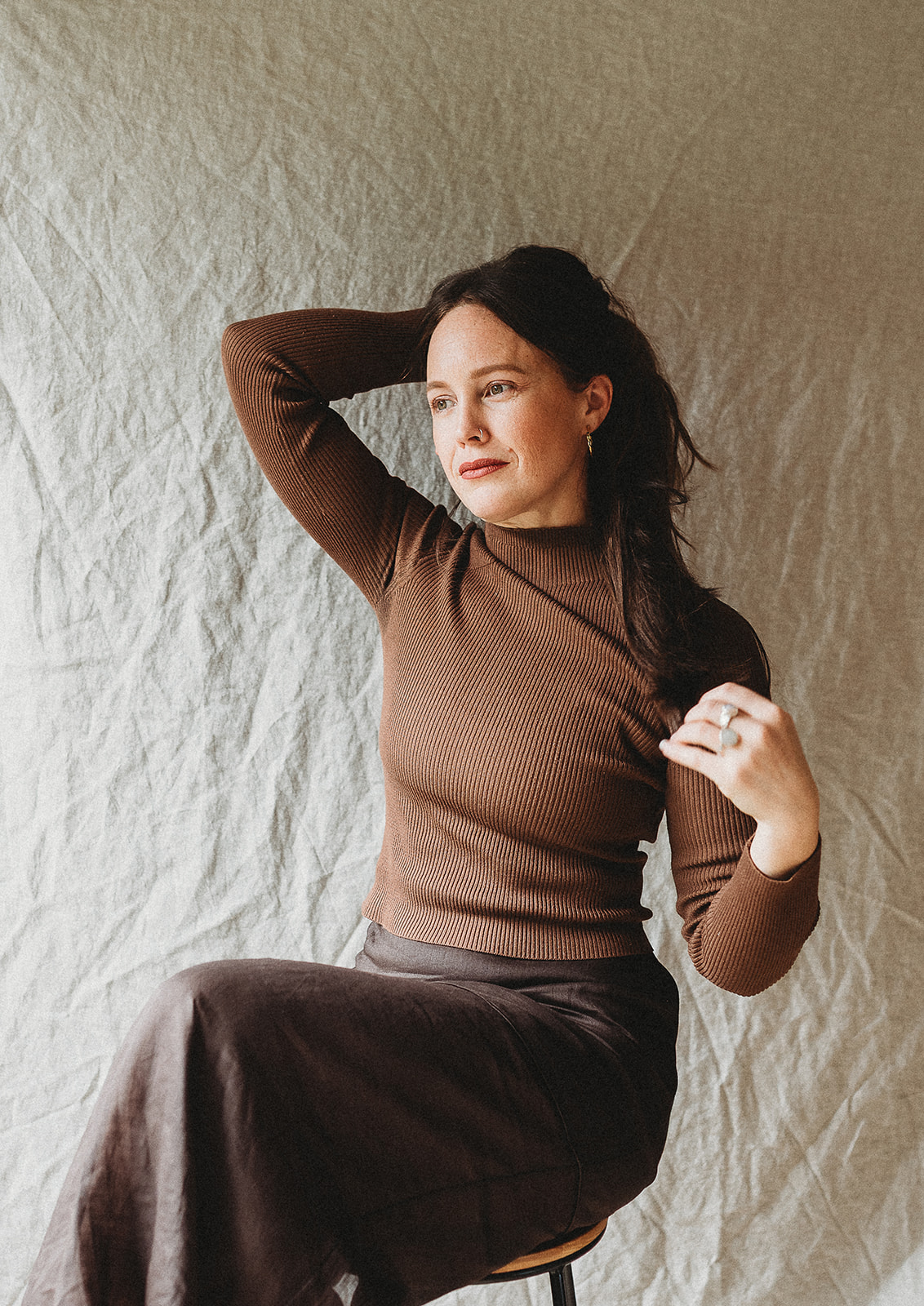
Looking back, my life has been less about changing careers than continually transforming the way I see myself. Each chapter has asked me to step into unfamiliar territory and follow the quiet pull of curiosity.
Building my tiny home became the clearest expression of that belief. What began as the final project of my carpentry apprenticeship became our first home—built with my own hands during one of the most challenging seasons of my life. I wanted my daughter to grow up believing that she could create a meaningful life with curiosity, determination and the courage to begin.
Today, I’m drawn to work that leaves thoughtful imprints: projects that respect their landscape, materials that grow more beautiful with age, and craftsmanship that honours those who came before us while caring for those still to come.
If my work leaves anything behind, I hope it’s the belief that thoughtful attention matters. That the way we care for our homes, our landscapes and one another becomes part of the world we leave behind. I believe that’s the legacy worth building.